
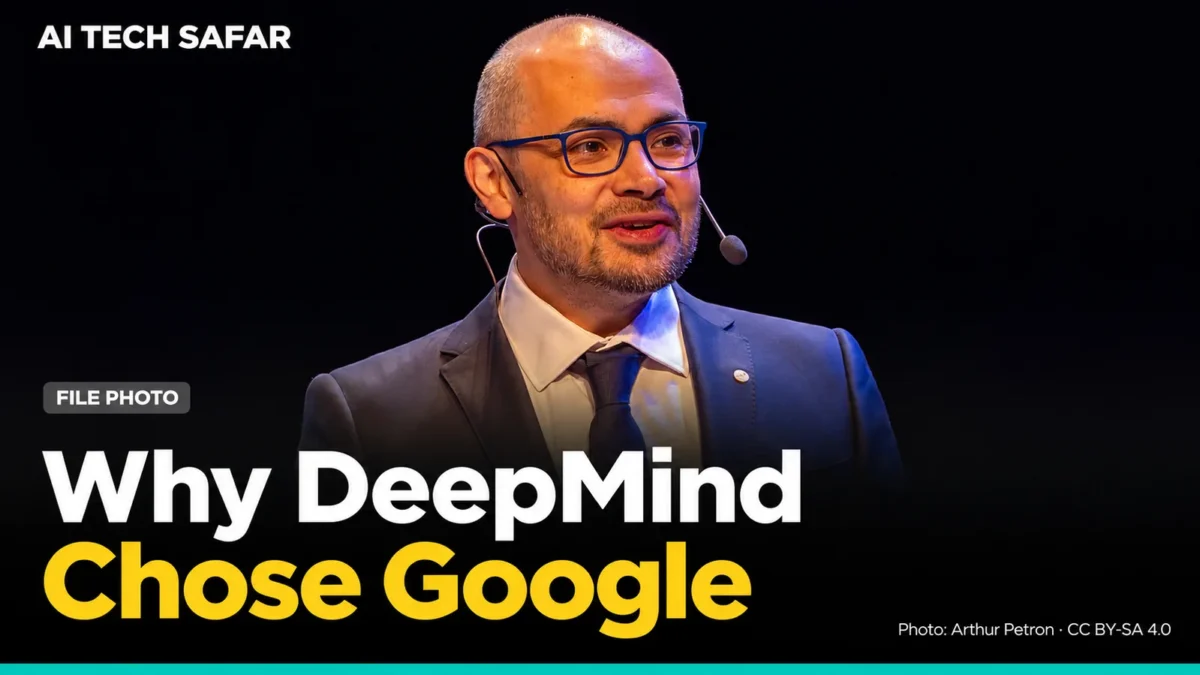
Google acquired DeepMind in 2014. A later account attributed to co-founder Demis Hassabis helps explain one part of the decision: a research lab needed capital and a way to retain researchers while competing with much larger companies.
What the reported account says
The Times of India reported Hassabis’s retrospective explanation in July 2026. He described needing roughly $7 billion of investment while struggling to raise $10 million rounds, and said the Atari work attracted competing interest in the team. These are his reported recollections, not independently audited financing requirements.
This article no longer presents a precise acquisition price, salary-offer table or a long quotation as if each had been verified from an original transcript. The linked report supplies the attribution; an original interview would be needed to check its full context.
Why a research breakthrough creates a business problem
Research can attract talent, funding and competitive attention before it produces a product that pays the bills. A lab then has to decide how to finance continued work and what independence it can preserve. Selling, partnering and raising more capital involve different compromises.
Keeping a team together is only one consideration. Infrastructure access, ownership rights, research priorities and governance also matter. An anecdote about fundraising should not be treated as proof that an acquisition was the only possible outcome.
What later success can and cannot prove
It is tempting to read every subsequent achievement back into the original decision. That makes the story cleaner than the evidence. A successful research result years later does not show that every alternative route would have failed, or that the buyer and founders knew exactly how the field would develop.
The more useful question is what constraints they faced at the time and which terms changed those constraints. Separate the reported motivation from our interpretation of what the deal enabled.
Our read
The story illustrates how difficult it can be to finance long-horizon research before a commercial model is established. It does not supply a universal rule that independent AI labs must sell. Readers comparing today’s companies should examine their own resources, contracts and objectives instead of assuming one historical deal is a template.
Sources and scope
Source check: November 17, 2026. Attributed retrospective claims to the published report; removed an unsourced price/salary table and unsupported certainty about alternative outcomes. This is source-based reporting and editorial analysis, not a hands-on product or investment test.