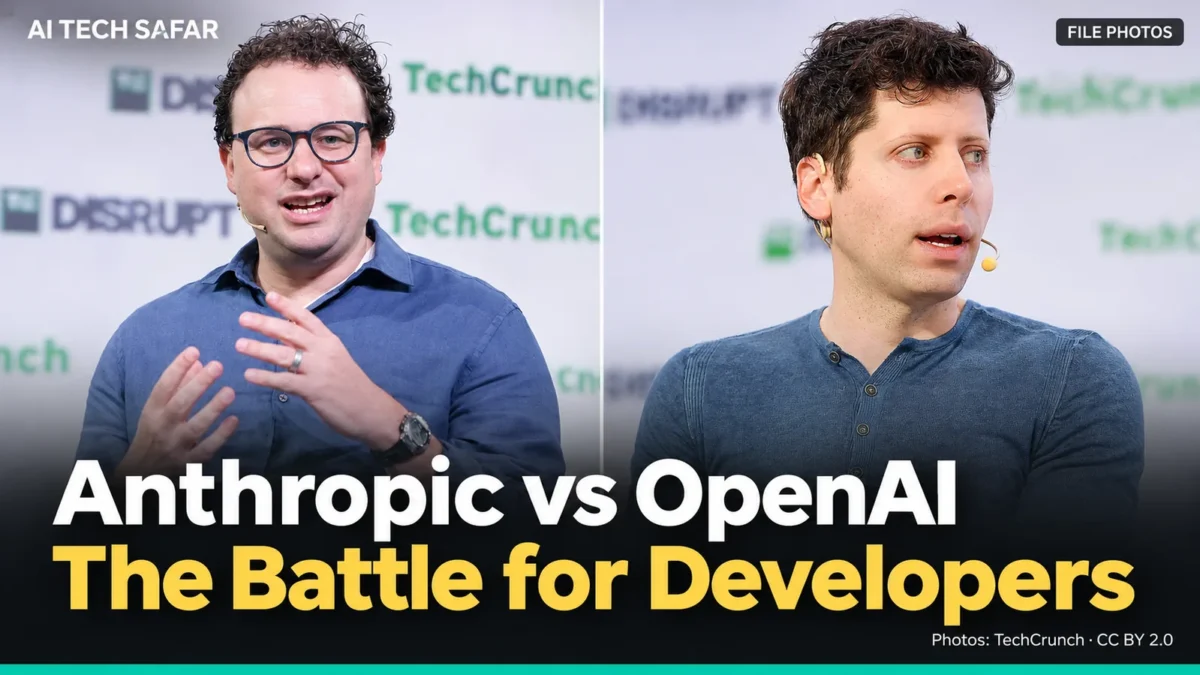
Overview: Anthropic vs OpenAI
Explore Anthropic vs OpenAI through the account of the coding market, adoption and product strategy, with context on what market-share figures measure.
For years, OpenAI was simply “the AI company”—the default name anyone reached for when talking about artificial intelligence. That default status is now genuinely being contested. Through 2026, Anthropic has been steadily eating into OpenAI’s lead, not through a flashier chatbot, but by winning over the one audience that quietly decides which AI company actually makes money: developers and enterprises.
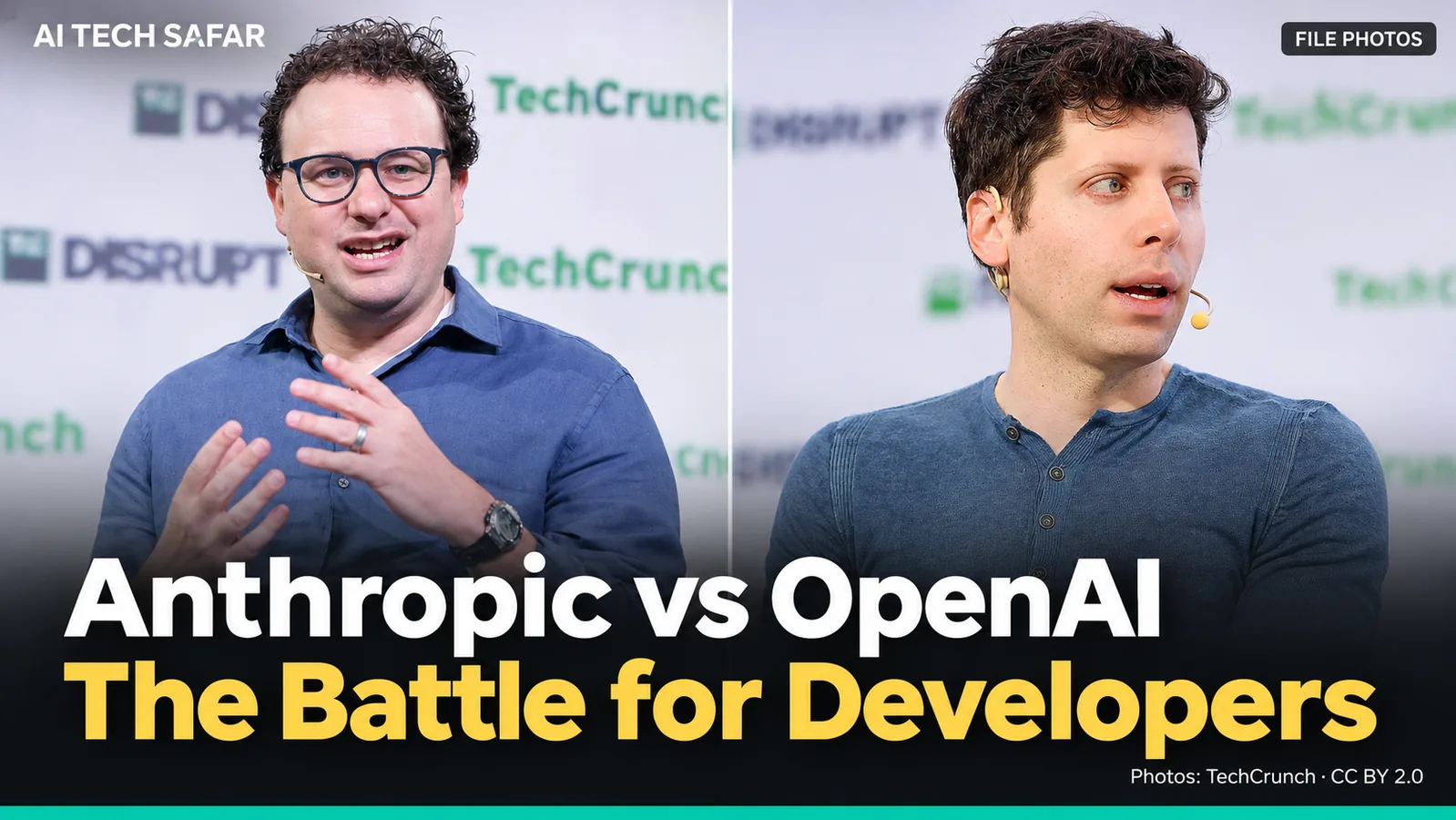
This is exactly the kind of shift industry watchers mean when they talk about the “AI market share war” — and this week, that war has a clear scoreline.
Even OpenAI’s own CEO has publicly acknowledged the rough patch. In a July 16 post on X, Sam Altman admitted the company’s last 12 months weren’t its best, largely attributing that to his own leadership, while promising the next year would be OpenAI’s strongest yet.
Quick Summary & Key Takeaways
- The Core Shift: Anthropic has gained ground by focusing heavily on developers and enterprise customers, while OpenAI split its attention across consumer products and side projects.
- Coding Is the Battleground: Claude Code has pulled ahead of OpenAI’s Codex among developers and enterprise customers, reportedly beating it on both speed and ease of use.
- A Third Competitor Looms: Google has been simultaneously ramping up pressure on both companies with its growing Gemini platform.
- Altman’s Public Admission: OpenAI’s CEO has openly acknowledged a difficult past year, taking personal responsibility while promising a stronger year ahead.
- Leadership Turnover Adds Pressure: OpenAI has been reorganizing senior leadership responsibilities, including the departure of Fidji Simo, adding uncertainty during a competitive moment.
OpenAI vs. Anthropic: Where Each Stands
| Factor | OpenAI | Anthropic |
|---|---|---|
| Core Strength | Massive consumer user base via ChatGPT | Strong developer and enterprise trust |
| Coding Tool | Codex — reportedly slower, less developer-friendly | Claude Code — gained strong developer momentum |
| Recent Focus | Consumer products and side projects | Developers and enterprise AI tools |
| Leadership | Recent reorganization; Fidji Simo’s departure added uncertainty | Comparatively stable during this period |
| Strategy Going Forward | Doubling down on Codex and enterprise AI tools | Continuing to expand its developer-first positioning |
What Happened? How Anthropic Closed the Gap
The clearest turning point in this shift has been AI coding tools. Claude Code built strong momentum with developers and enterprise customers throughout 2026, while OpenAI’s Codex struggled to keep pace on speed and usability—a gap that mattered more than it might initially seem. Coding tools aren’t just another product category for AI labs; they’re a direct pipeline into enterprise budgets, since companies adopting an AI coding assistant often standardize their broader AI tooling around the same vendor.
While Anthropic concentrated on winning that developer and business audience, OpenAI’s attention was split more broadly across consumer-facing products and various side initiatives, even as ChatGPT’s own growth began to slow. That divided focus created an opening, and Anthropic moved into it methodically rather than trying to out-hype OpenAI on the consumer side.
Sam Altman’s own public comments reflect this shift in tone. He acknowledged that the company’s recent performance fell short of its best, framing the shortfall as largely his own responsibility as CEO, while expressing confidence that OpenAI’s strongest period is still ahead. That kind of direct, public accountability from a major AI lab’s CEO is relatively rare, and it signals OpenAI recognizes the competitive stakes clearly.
Compounding the pressure, OpenAI has also been navigating leadership changes, reorganizing responsibilities among senior executives following Fidji Simo’s departure—the kind of internal shuffling that can slow strategic execution at exactly the moment competitors are moving fastest.
Why It Matters: The AI Race Has a New Shape
This shift signals something bigger than a single company’s rough patch:
- Practical Tools Now Matter as Much as Raw Power: The AI race has moved beyond simply having the most impressive model—winning developers with tools that are genuinely fast and easy to use is proving just as decisive.
- It’s No Longer a Two-Horse Race: Google’s Gemini platform has been growing in parallel, adding a third serious competitor into a rivalry that used to be framed primarily as OpenAI versus Anthropic.
- OpenAI’s Advantages Remain Real: Despite the coding setback, OpenAI still holds a massive consumer user base through ChatGPT and a strong overall market position—the challenge now is converting that reach into steady enterprise revenue.
- The Comeback Plan Is Already Public: OpenAI has signaled it’s redirecting focus toward Codex and enterprise AI tools specifically to close the gap Anthropic opened.
💡 AI Tech Safar Insight
What makes this moment notable isn’t that OpenAI is struggling—by most measures, it’s still a dominant company with enormous reach. It’s that the competitive battlefield has quietly shifted beneath it. For the past few years, the assumption was that whoever built the most impressive consumer chatbot would win the broader AI race. Anthropic’s rise suggests otherwise: developer trust and enterprise reliability may be the more durable moat, since businesses don’t switch AI vendors as casually as consumers switch chatbot apps. If that’s true, OpenAI’s ability to “fight back” will depend less on flashy ChatGPT updates and more on whether Codex can genuinely close the usability gap with Claude Code—a much harder, slower kind of battle than winning a viral product launch.
Frequently Asked Questions (FAQs)
Q1: Why is Anthropic gaining ground on OpenAI?
Anthropic has focused heavily on developers and enterprise customers, particularly through Claude Code, which gained strong momentum while OpenAI’s Codex struggled to match it on speed and ease of use.
Q2: Has Sam Altman addressed OpenAI’s recent performance?
Yes. In a July 16 post on X, Altman acknowledged the company’s last 12 months weren’t its best, took personal responsibility, and said he expects OpenAI’s strongest year yet to follow.
Q3: Is Google also a factor in this competition?
Yes. Google’s Gemini platform has been growing in parallel, adding additional competitive pressure on both OpenAI and Anthropic simultaneously.
Q4: What is OpenAI doing to respond?
The company is shifting more focus toward Codex and enterprise AI products, aiming to attract more business customers and close the gap Anthropic has opened in the coding tools space.
What Do You Think?
Can OpenAI’s massive ChatGPT user base translate into enterprise dominance, or has Anthropic already secured a lasting edge with developers? Share your thoughts in the comments below!
Related Reading:
- AI Models 2026: The Complete Guide to Gemini, GPT, Claude & China’s Challengers
- Cursor vs Claude Code vs GitHub Copilot: Which AI Coding Tool Is Worth Paying For?
- Claude Opus 5 vs GPT-5.6 Sol: The Benchmark Showdown Developers Are Debating
- Claude Code Creator Says Most Users Are Making One Mistake With AI Prompts
- OpenAI Just Cut GPT-5.6 Luna’s Price by 80% — Here’s Why
Source: Reporting based on Analytics Insight.