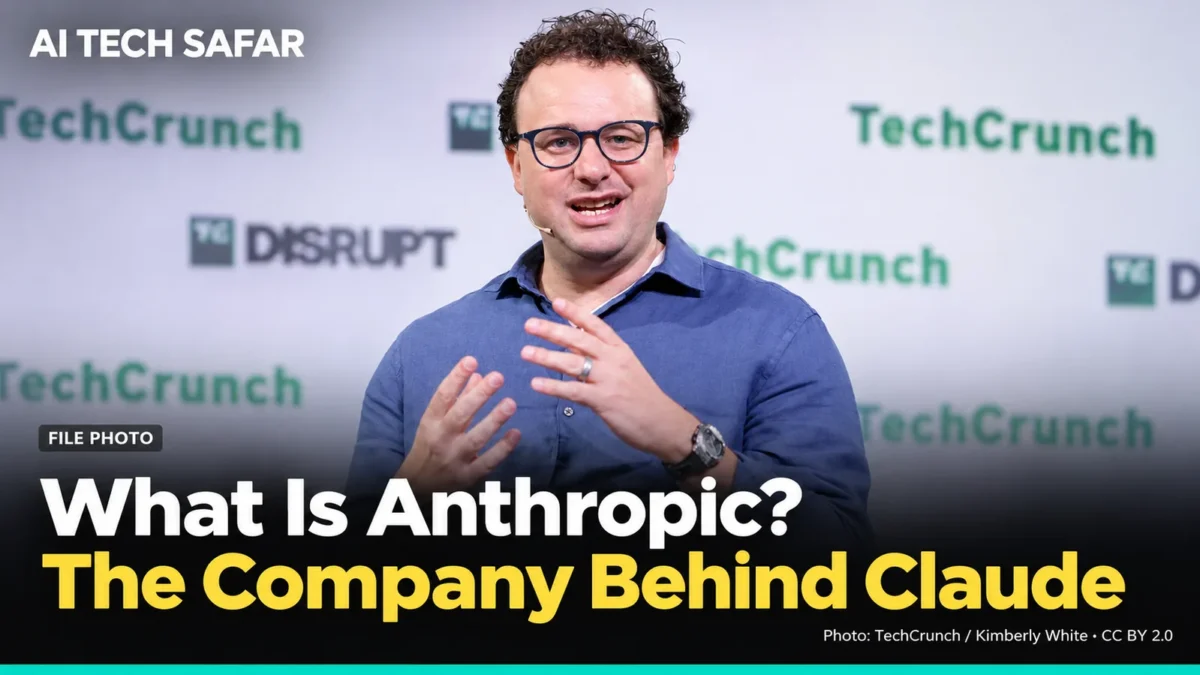
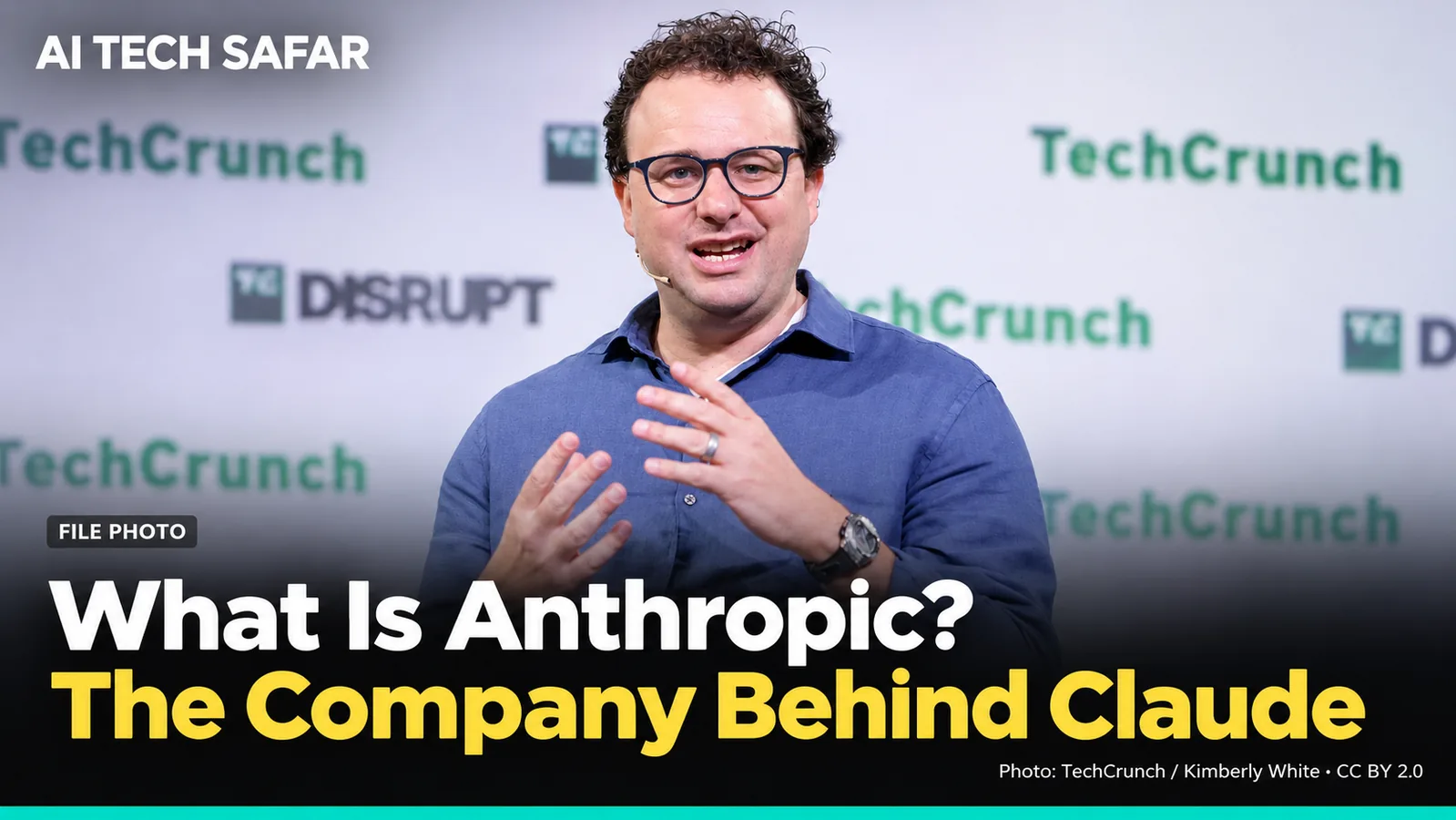
What Is Anthropic AI? The Complete 2026 Guide to the Company Behind Claude
TL;DR
- Anthropic is an AI safety company founded in 2021 by Dario and Daniela Amodei, along with five other former OpenAI researchers. It builds the Claude family of models.
- As of August 2026, Anthropic is the most valuable AI startup in the world – a $965 billion post-money valuation after a $65 billion Series H in May 2026, running at roughly $47 billion in annualized revenue.
- Its current model lineup is Claude Opus 5, Claude Sonnet 5, Claude Haiku 4.5, and the Mythos-class Claude Fable 5 – each priced differently depending on how much reasoning power you need.
- Anthropic’s core differentiator is Constitutional AI – training models against an explicit set of written principles instead of relying purely on human feedback.
Imran Khan Pathan, Editor: Claude is the model I actually build with – it’s my daily driver for the coding side of every AI-powered app I run, from a workflow tool for Chartered Accountants to this blog’s own SEO tooling. Everything in this guide about pricing, models, and what Claude is actually good at is filtered through using it for real work, not just reading the announcement posts.
What Is Anthropic? (Quick Answer)
Anthropic is an American artificial intelligence company that builds Claude, one of the three frontier AI model families (alongside OpenAI’s GPT and Google’s Gemini) that most of the AI industry runs on today. It was founded in 2021, is structured as a public benefit corporation, and has built its entire identity around a specific bet: that AI safety research and building genuinely useful, capable models aren’t in tension – they’re the same project.
As of August 2026, that bet has paid off commercially in a way few predicted even two years ago. Anthropic is now the most valuable AI startup on the planet, worth more than OpenAI on paper, with Claude embedded in enterprise workflows, coding pipelines, and increasingly, government and defense contracts.
Anthropic Company Overview
Founding Story and Leadership
Anthropic was founded in 2021 by Dario Amodei (CEO) and his sister Daniela Amodei (President), along with five other researchers – including Jack Clark, Sam McCandlish, and Tom Brown – who left OpenAI over disagreements about the pace and direction of AI development. The founding story matters because it explains almost everything about how the company positions itself: Anthropic markets itself as the safety-conscious alternative in a field it thinks is moving too fast without enough caution.
The company is structured as a Public Benefit Corporation, which legally allows its board to weigh safety and public benefit alongside shareholder returns – a structural choice, not just a branding one.
Mission and Focus
Anthropic’s stated mission centers on ensuring that AI development benefits humanity, primarily by researching AI safety and building models that are helpful without being dangerous. In practice, this shows up as a heavy internal investment in interpretability research (understanding what’s actually happening inside a model), Constitutional AI (covered in detail below), and public advocacy for AI regulation – Anthropic has been one of the more vocal labs supporting oversight measures like the AI Kill Switch Act working through Congress in 2026.
Claude AI Models Explained
Claude isn’t one model – it’s a family, with different tiers trading off capability against cost and speed. As of late August 2026, here’s the current lineup:
| Model | Best For | Price (Input/Output per Million Tokens) |
|---|---|---|
| Claude Haiku 4.5 | Fast, high-volume, low-cost tasks | $1 / $5 |
| Claude Sonnet 5 | Everyday agentic work, coding, near-flagship quality at a fraction of the cost | $2 / $10 (permanent as of Aug 2026) |
| Claude Opus 5 | Complex agentic coding, enterprise work, the default flagship | $5 / $25 |
| Claude Fable 5 | Maximum available capability (Mythos-class) | $10 / $50 |
All current Claude models support text and image input, text output, and vision – multimodal input is standard across the lineup now, not a premium feature reserved for the top tier. Context windows run up to 1 million tokens on Sonnet 5 and Opus 5, large enough to load a full codebase into a single prompt.
One detail worth knowing if you’re budgeting API costs: Claude’s tokenizer changed with the 4.7-and-later generation, and it can produce up to 30-35% more billable tokens for the same text compared to older models. The sticker price looks similar generation to generation, but your actual token count per request may not be.
Claude Code and Claude Cowork deserve a specific mention here – they’re not separate models, but dedicated interfaces (Claude Code for terminal-based agentic coding, Cowork for broader knowledge work) built on top of the same model family. Claude Code alone was reportedly generating around $2.5 billion in annualized revenue by early 2026, a sign of how much of Anthropic’s growth is coming from developers specifically.
Anthropic’s Funding and Valuation
Anthropic’s fundraising trajectory over the past two years has been genuinely unusual, even by AI-industry standards. The headline moment: on May 28, 2026, Anthropic closed a $65 billion Series H at a $965 billion post-money valuation – nearly tripling its valuation from $380 billion just three months earlier, and passing OpenAI’s most recent $852 billion mark to become the most valuable AI startup in the world.
A few details make this round more interesting than the headline number:
- Revenue backing it up: Anthropic’s annualized run-rate revenue crossed $47 billion around the time of the round, up from roughly $14 billion in February 2026 and about $10 billion at the end of 2025 – a growth rate north of 300% year-over-year.
- Who’s actually in the round: Rather than a typical VC-heavy round, Series H was co-led by Altimeter Capital, Dragoneer, Greenoaks, and Sequoia Capital, with major strategic participation from the companies that build the infrastructure Claude runs on – Amazon, Google, Samsung, SK Hynix, and Micron among them. $15 billion of the $65 billion was previously committed hyperscaler capital, including $5 billion from Amazon.
- IPO speculation: Series H is widely reported to be Anthropic’s last private round before a public listing, with some reporting pointing to a possible IPO window as early as October-November 2026 – though Anthropic has not filed an S-1 or confirmed a date.
Constitutional AI Explained
Constitutional AI is the training approach that most differentiates Anthropic’s models philosophically from competitors. The short version: instead of relying only on human feedback to teach a model what’s acceptable (the standard RLHF – Reinforcement Learning from Human Feedback – approach), Anthropic trains Claude against an explicit written “constitution” – a set of principles the model is taught to evaluate its own outputs against.
In practice, this works through a self-critique loop: the model generates a response, then critiques that response against the constitution’s principles, then revises it – largely without needing a human to manually label each example as good or bad. The theoretical advantage is scalability (you don’t need armies of human raters for every edge case) and consistency (the model’s behavior is anchored to explicit, auditable principles rather than the implicit biases of whoever happened to be doing the labeling).
This is also the throughline connecting Anthropic’s product decisions to its safety research – interpretability work (literally trying to understand what’s happening inside the model’s “reasoning”) and Constitutional AI are meant to reinforce each other: you can’t audit a model against a constitution if you can’t see what it’s actually doing.
Anthropic vs OpenAI vs Google DeepMind
None of the three major labs map onto each other feature-for-feature, so “who’s winning” depends heavily on what you’re trying to do. Here’s the practical breakdown as of August 2026:
| Factor | Anthropic (Claude) | OpenAI (GPT) | Google DeepMind (Gemini) |
|---|---|---|---|
| Valuation (2026) | $965B | $852B (most recent disclosed) | Part of Alphabet, not separately valued |
| Core strength | Coding, agentic workflows, document/long-context reasoning | General-purpose breadth, consumer reach, multimodal features | Video/multimodal understanding, deep Google ecosystem integration |
| Safety positioning | Central to brand identity – Constitutional AI, interpretability research | Present, but not the primary brand differentiator | Backed by Google’s broader AI principles framework |
| Flagship developer tool | Claude Code | ChatGPT Work / Codex | Gemini in Android Studio, AI Studio |
If you’re deciding which to actually use rather than which company to root for, our full Claude vs ChatGPT comparison goes deeper into real benchmark and pricing tradeoffs.
Claude for Developers
Beyond the consumer chat interface, Anthropic has built a genuine developer ecosystem around Claude:
- Claude Code – a terminal-based agentic coding tool that reads your entire codebase, plans changes, and executes them with your oversight. Covered in depth in our Claude Code best practices guide.
- Model Context Protocol (MCP) – an open standard Anthropic introduced for connecting AI models to external tools, data sources, and systems in a consistent way. It’s become one of the more widely adopted pieces of AI infrastructure across the industry, not just within Anthropic’s own products.
- The Claude API – available directly, and through Amazon Bedrock, Google Cloud Vertex AI, and Microsoft Foundry, giving enterprises flexibility in how they deploy Claude within their existing cloud commitments.
IPO and What’s Next
Anthropic’s Series H is widely expected to be its final private fundraising round before a public listing. Reporting has floated an IPO window as early as October or November 2026, though as of this writing Anthropic has not filed an S-1 or confirmed a timeline – treat specific dates as speculation until Anthropic says otherwise directly.
On the product roadmap, Anthropic executives have pointed to continued expansion of Claude Code into more languages and IDEs, an enterprise contracting layer targeting HIPAA and FedRAMP High compliance, and further investment in the compute capacity needed to keep up with demand – the entire Series H round was explicitly framed around scaling infrastructure to meet growth, not just extending runway.
FAQ
What is Anthropic in simple terms? Anthropic is an AI company that builds Claude, one of the three leading AI model families in the world, with a specific focus on making advanced AI systems safe as well as capable.
Who owns Anthropic? Anthropic is privately held, with major investors including Amazon, Google, Salesforce Ventures, Saudi Arabia’s Public Investment Fund, and a large consortium of institutional investors from its Series H round. It is not currently publicly traded.
Is Claude better than ChatGPT? It depends on the task – Claude generally leads on coding and long-document reasoning, while ChatGPT tends to be stronger as an all-in-one general-purpose platform with broader consumer features. See our full comparison for the detailed breakdown.
How much does Claude cost? Claude.ai is free to use with Sonnet 5 as the default model. Claude Pro is $20/month ($17/month billed annually), and Max plans run $100-$200/month for higher usage limits and Opus 5 access by default. API pricing ranges from $1/$5 per million tokens (Haiku 4.5) up to $10/$50 (Fable 5).
What does Constitutional AI actually mean? It’s a training method where a model critiques and revises its own outputs against an explicit, written set of principles – rather than relying solely on human feedback to shape its behavior.
Is Anthropic going to IPO? It’s widely expected, with some reports suggesting a window as early as late 2026, but Anthropic hasn’t confirmed a date or filed the paperwork required for a public listing.
What is Claude Code? Claude Code is Anthropic’s terminal-based coding agent – it reads your codebase, plans multi-step changes, and executes them, functioning as an AI pair programmer rather than a simple autocomplete tool.
How is Anthropic funded? Through a series of private funding rounds, most recently a $65 billion Series H in May 2026 at a $965 billion valuation, with major backing from Amazon, Google, and a consortium of institutional and strategic infrastructure investors.
Related Reading on AI Tech Safar
- Claude vs ChatGPT in 2026: Which AI Is Actually Better?
- Claude Code Best Practices: The Complete 2026 Guide
- Is Claude Down? The August 2026 Outage and 2026’s Alarming Pattern, Explained
- AI Kill Switch Act: Congress, OpenAI, and the Hugging Face Bill
Useful Sources
- Anthropic – Series H Funding Announcement
- Anthropic – Introducing Claude Sonnet 5
- Anthropic – Official Claude Pricing Documentation
- TechCrunch – Anthropic Raises $65 Billion, Nears $1T Valuation
- CNBC – Anthropic Tops OpenAI as Most Valuable AI Startup
For the broader context and related reading, explore our AI Models 2026: Comparing Gemini, GPT, Claude and More.