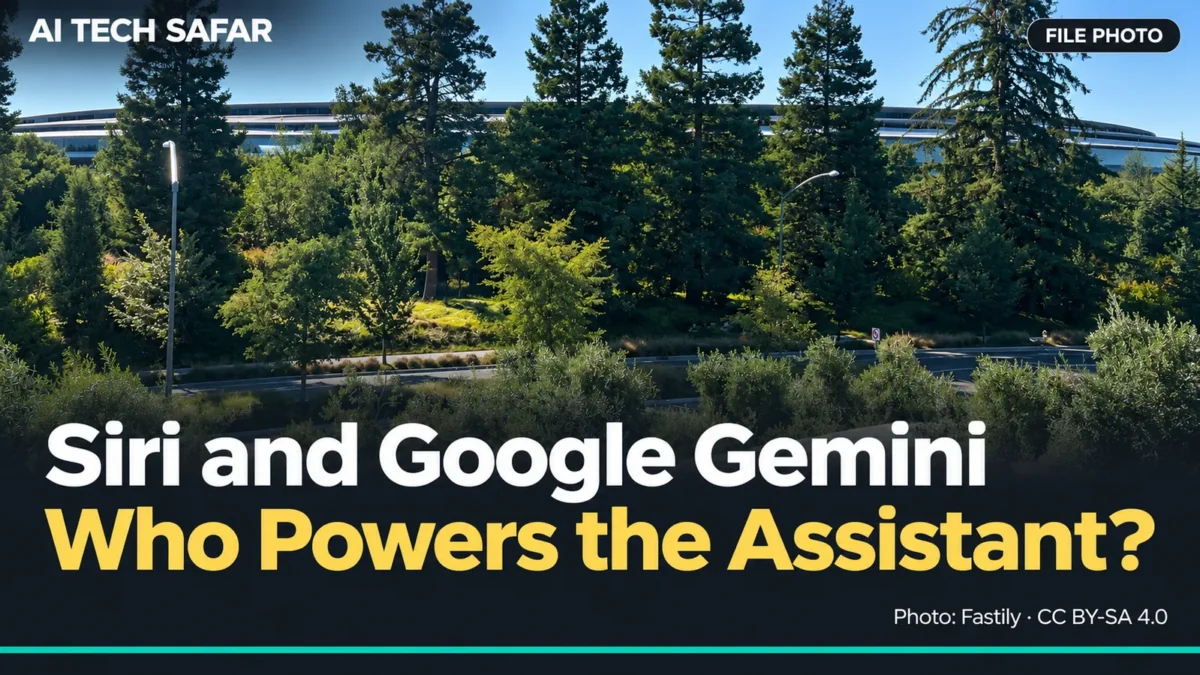
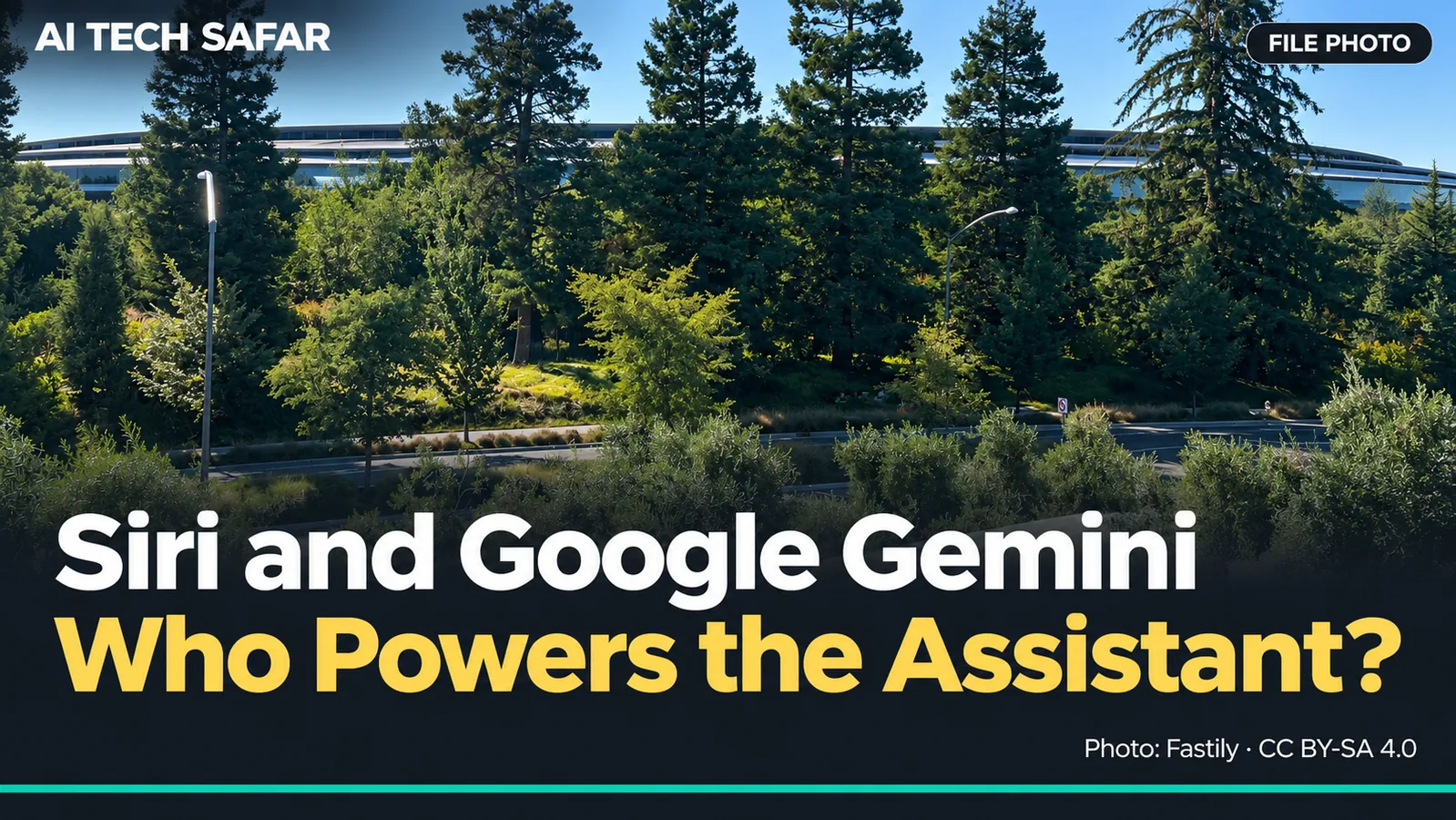
Overview: Siri and Google Gemini
Explore Siri and Google Gemini, Apple’s reported AI partnership and the reasoning behind its approach, including the implications for users and privacy.
Why Does Siri Use Google Gemini? Apple’s New CEO and the AI Strategy Nobody Saw Coming
TL;DR
- John Ternus became Apple’s CEO on September 1, 2026, replacing Tim Cook, who is now executive chairman. It’s Apple’s first CEO change since 2011.
- Ternus inherits a specific, uncomfortable bet Cook already made: Apple is paying Google roughly $1 billion a year to license a custom version of Gemini to power the rebuilt Siri – alongside an existing ChatGPT handoff for complex queries.
- This follows two years of Apple’s own AI strategy visibly failing: Apple Intelligence was announced in 2024, Siri’s overhaul was delayed repeatedly, and AI/ML chief John Giannandrea was pushed out.
- Ternus’s first public event as CEO is September 9, 2026 (“Surprise and Shine”) – expect the foldable iPhone and iPhone 18 Pro, not a new AI reveal.
Reviewed by Imran Khan Pathan, Editor at AI Tech Safar. I’ve been running the rebuilt Siri on my own iPhone since Apple pushed it out after WWDC in June, specifically checking whether the “personal context” features Federighi promised on stage actually showed up in daily use or stayed a keynote slide. This piece is written from that ongoing testing, cross-checked against Apple’s own succession announcement and reporting from Bloomberg, Reuters, and PYMNTS rather than a single press release.
Last updated: September 2026
What Actually Happened
On September 1, 2026, John Ternus – Apple’s hardware engineering chief for the last five years and a 24-year company veteran – became CEO. Tim Cook, who had run Apple since 2011, moved into the newly significant role of executive chairman, where he’s expected to keep working policy relationships in Washington and Beijing rather than step away entirely.
The move itself wasn’t a surprise – Apple’s board approved it back in April, and Cook spent the summer transitioning Ternus in publicly. What’s more interesting is what Ternus is actually inheriting, because it’s not really a hardware problem. It’s an AI problem, and it’s bigger than most of the CEO-transition coverage has made it sound.
The AI Failure Story Ternus Is Walking Into
To understand why this matters, you need the timeline that got Apple here – because it’s a genuinely unusual one for a company built on not announcing things until they work.
- 2024: Apple announces Apple Intelligence with heavy marketing, including a rebuilt, more personal Siri capable of deep cross-app actions.
- 2025: The upgraded Siri slips. Apple runs ads for features that don’t exist in shipping software yet – a genuine break from how the company usually operates.
- 2025 (later): It slips again, into 2026. The internal explanation: Apple’s old Siri architecture and the new AI-driven one couldn’t be merged cleanly, forcing a rebuild significant enough to create real friction between engineering and marketing over who had promised what.
- December 2025: John Giannandrea, Apple’s AI/ML chief since 2018, is pushed toward retirement. His responsibilities get split – some to operations chief Sabih Khan and services chief Eddy Cue, and a newly hired AI VP, Amar Subramanya (previously the engineering lead for Google Gemini, briefly at Microsoft after), reporting directly to software chief Craig Federighi.
- June 2026 (WWDC): Apple finally reveals the rebuilt Siri on stage – Federighi, Subramanya, and Vision Pro-turned-Siri-lead Mike Rockwell walk through it together, with Cook and Ternus watching from the front row.
- September 1, 2026: Ternus becomes CEO with that entire saga now his to finish delivering on.
Federighi’s own line from the stage – “This is the amount of the Google assistant we use, which is none” – was meant to reassure developers that Apple wasn’t simply outsourcing Siri’s brain to a rival. The pricing and licensing details reported since then complicate that message considerably.
The Part Most Coverage Undersold: Apple Is Paying Google for This
Here’s the detail that turns this from a normal executive reshuffle story into a genuinely strange moment in AI competition: Apple agreed in January 2026 to pay Google roughly $1 billion a year to license a custom version of Gemini specifically to power the rebuilt Siri’s core reasoning – the part responsible for cross-app actions and multi-turn conversation.
Apple has said this doesn’t represent a major change to its existing ChatGPT integration, which still lets Siri hand off certain complex queries to OpenAI’s models. But reporting since the deal closed makes clear that arrangement is now the secondary path – Gemini handles the core Siri experience, not ChatGPT.
| What Powers What | Provider | Role |
|---|---|---|
| Core Siri reasoning, cross-app actions, multi-turn conversation | Google (custom Gemini) | Primary – ~$1B/year licensing deal, Jan 2026 |
| Complex query handoff | OpenAI (ChatGPT) | Secondary, unchanged from earlier integration |
| On-device features (writing tools, notification triage, photo edits) | Apple’s own foundation models | Unaffected by the Gemini deal |
| Compute infrastructure for the rebuild | Nvidia chips | Reported hardware backbone for the new Siri stack |
For a company that has spent a decade positioning its silicon and on-device AI as a competitive moat, quietly becoming one of Google’s largest AI licensing customers is a real admission. It’s not that Apple’s on-device features (writing tools, notification summaries, photo edits) are outsourced – those still run on Apple’s own models. It’s specifically the conversational, “understands what you’re actually asking” layer of Siri that now runs on a rival’s model.
Why This Leadership Change – And Why Now
Cook has said for years his successor would come from inside Apple, which narrowed the field early. Jeff Williams, the longtime COO and consensus favorite for most of the last decade, left in late 2025, removing the obvious pick. Craig Federighi – popular with developers, articulate on stage – was reportedly considered too closely associated with the AI stumbles themselves, since Siri’s failure to keep pace happened under his software organization’s watch.
That left Ternus: an engineer who’s run hardware for the iPhone, iPad, Mac, Apple Watch, and Vision Pro, and who managed Apple’s silicon transition (the shift away from Intel chips) from start to finish – a bet that reshaped Apple’s cost structure and product cycles, and reportedly cemented his reputation internally as someone who can execute a multi-year technical transition without losing the thread.
The rest of the leadership bench moved too: Johnny Srouji takes over hardware as chief hardware officer, Eddy Cue’s services division gets the App Store back, and Phil Schiller has stepped back from events and the App Store per Bloomberg’s reporting.
What to Actually Watch For Next
Four things matter more than the CEO title itself over the next year:
- September 9, 2026 – Ternus’s stage debut. His first keynote as CEO. Don’t expect a new AI reveal here – this event was locked in long before he took the chair, and it’s built around the foldable iPhone and iPhone 18 Pro lineup, not Siri.
- Whether the rebuilt Siri holds its timeline. The Gemini-powered version shown at WWDC still needs to prove, in Wedbush analyst Dan Ives’s words, that it can move “from promise to everyday utility” rather than repeat the 2024-2025 pattern of announcing before shipping.
- Further leadership turnover. More retirements are expected in the coming months as Ternus shapes his own bench, separate from Cook’s.
- Cook’s actual influence as executive chairman. His policy remit gives him a live, ongoing role in Washington and Beijing that’s unusual for the position – worth watching whether that quietly keeps him steering high-level strategy, AI included.
💡 AI Tech Safar Insight
The genuinely strange part of this story isn’t the CEO change – succession at Apple is almost always calm and telegraphed years in advance, and this was no exception. It’s that Apple, the company most associated with building everything itself down to the silicon, is now paying a direct AI competitor roughly $1 billion a year to make its flagship assistant work. That’s not a partnership announced with fanfare; it’s a licensing deal that surfaced through reporting, not a press release. Whatever Ternus does next, he’s the first Apple CEO in the company’s history to start the job with the honest admission – even if never said in those words – that Apple’s own AI wasn’t good enough to ship on its own.
FAQ
Who is Apple’s new CEO?
John Ternus, previously Apple’s senior vice president of Hardware Engineering, became CEO on September 1, 2026, succeeding Tim Cook, who is now executive chairman of Apple’s board.
Why does Siri use Google Gemini instead of Apple’s own AI?
Apple’s own rebuilt Siri architecture struggled to deliver the cross-app, multi-turn conversational capability it promised in 2024. In January 2026, Apple agreed to pay Google roughly $1 billion a year to license a custom version of Gemini to power that core reasoning layer, while keeping its own on-device AI features (writing tools, notification triage) running on Apple’s own models.
Does ChatGPT still work with Siri?
Yes, but in a secondary role. Siri still hands off certain complex queries to OpenAI’s ChatGPT, an integration that predates the Gemini deal – Gemini now handles the primary conversational reasoning that used to be the plan for Apple’s own models.
What happened to John Giannandrea, Apple’s former AI chief?
Giannandrea, Apple’s senior vice president for Machine Learning and AI Strategy since 2018, stepped down in late 2025 and is set to retire in 2026, serving as an advisor in the interim. His responsibilities were split between operations chief Sabih Khan, services chief Eddy Cue, and new AI VP Amar Subramanya, who reports to software chief Craig Federighi.
Will John Ternus change Apple’s AI strategy?
It’s too early to say definitively. Ternus inherits the Gemini/ChatGPT arrangement Cook already committed to, and Apple’s product roadmap for the next year was largely set before he became CEO. The clearest early signal will be whether the rebuilt Siri actually ships reliably on its promised timeline under Federighi and Subramanya.
What’s happening at Apple’s September 9, 2026 event?
Apple’s annual September showcase, titled “Surprise and Shine” this year, is expected to unveil the iPhone 18 Pro lineup and Apple’s first foldable iPhone. It’s Ternus’s first keynote as CEO, though the product lineup was finalized before his transition.
Related Reading on AI Tech Safar
- AI Models 2026: The Complete Guide to Gemini, GPT, Claude & China’s Challengers
- The Complete Gemini Notebook (NotebookLM) Course: Free, Advanced, Start to Finish
- Grok AI vs ChatGPT: The Honest 2026 Comparison
Useful Sources
- Apple Newsroom – Official succession announcement (April 2026)
- PYMNTS – Apple’s New CEO Inherits an AI Strategy Built on Outsiders
- Washington Post – Ternus takes over as Apple CEO amid AI challenges
- Yahoo Tech – Inside Apple’s effort to build a Siri that’s “profoundly more capable” (WWDC 2026)
- Quartz – Apple’s quiet AI era just got a very loud replacement
- Al Jazeera – John Ternus succeeds Tim Cook as Apple CEO after 15 years
- NPR – John Ternus replaces Tim Cook as CEO of Apple