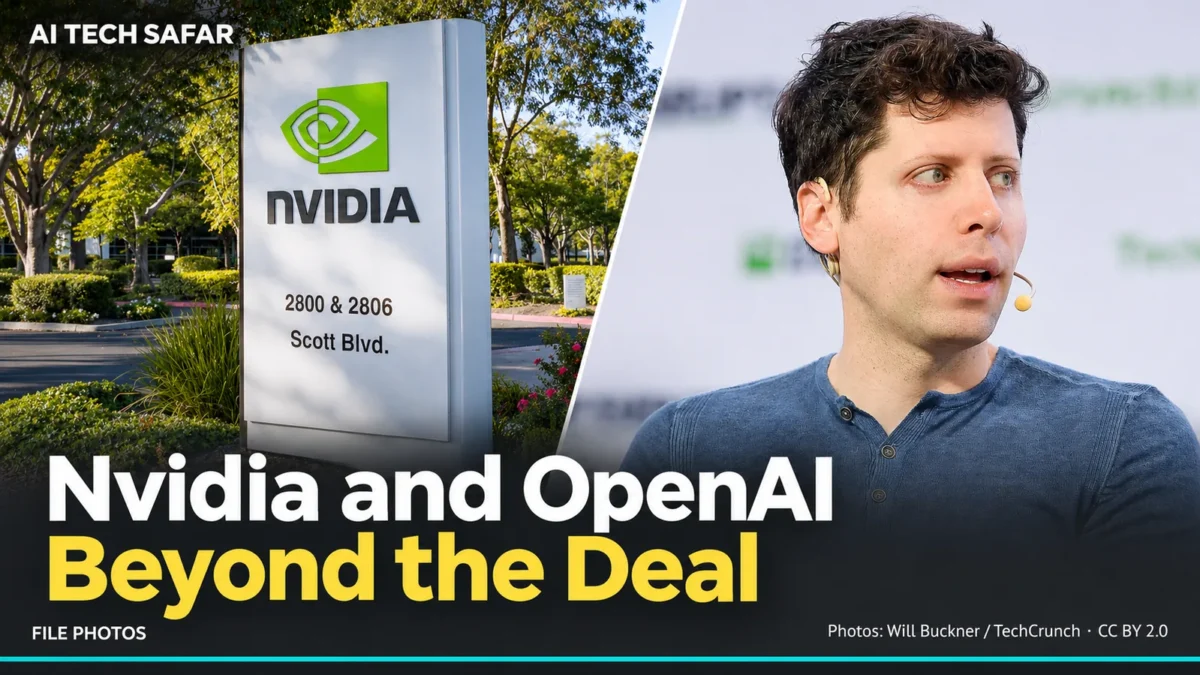
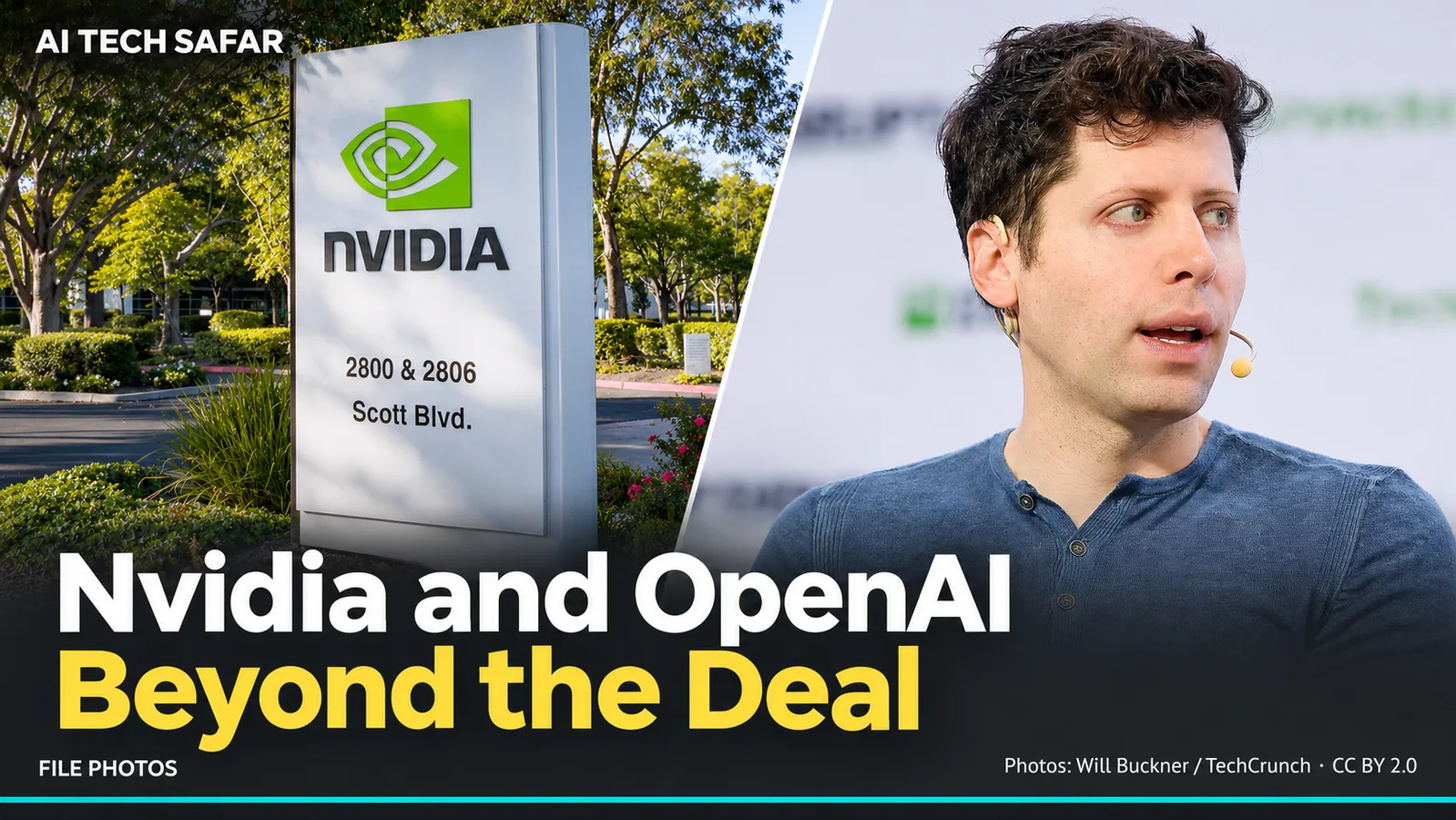
The reported Nvidia–OpenAI data-center backstop needs a distinction: a financing guarantee is not a cash investment, and talks are not a completed contract. This article does not establish that Nvidia signed a final $250 billion agreement.
What was reported, and what was announced
Reuters, citing the Wall Street Journal on July 26, reported discussions about a roughly $250 billion guarantee for an Ohio project. A subsequent August 14 Reuters report said the initial guarantee under discussion had fallen below $120 billion. Both accounts described evolving plans; the original headline number should not be presented as a settled obligation.
A separate, official September 2025 Nvidia announcement described a letter of intent for at least 10 gigawatts of systems and investment of up to $100 billion, progressively linked to deployment. Those terms should not be combined with a later reported guarantee as if they were one executed transaction.
Investment, guarantee and purchase commitment
| Term | Question to ask |
|---|---|
| Equity investment | How much cash has actually been invested, in exchange for what ownership? |
| Financing guarantee | Whose debt or lease is covered, and what event triggers payment? |
| Hardware order | Is there a binding purchase agreement and delivery schedule? |
| Infrastructure target | Which phases have land, power, permits and funding? |
Why the distinctions matter
A guarantee can help another company borrow, while leaving the guarantor exposed if the borrower cannot pay. Its headline size does not tell readers how much cash changes hands on announcement day. An equity commitment can also be conditional or phased. Neither should be added to projected hardware sales without checking for overlap.
Likewise, a multi-gigawatt deployment plan need not mean one completed building. Delivery depends on sites, grid connections, cooling, equipment and contracts. A useful progress report identifies which milestone has actually occurred instead of treating the final target as operational capacity.
What investors should monitor
- Company filings identifying binding obligations and contingent liabilities.
- Evidence of financing closing, rather than discussions about terms.
- Site-by-site power availability and deployment dates.
- Whether projected demand becomes contracted utilization and cash receipts.
Our analysis: an infrastructure partnership can expand opportunity and concentrate counterparty risk at the same time. The announcement alone does not prove a profitable return, uninterrupted GPU access or that an AI-market bubble is impossible.
Frequently asked questions
Is $250 billion confirmed spending?
Not by the evidence cited here. It was a reported guarantee under discussion, with a later report describing a smaller initial amount.
Does a guarantee buy every chip?
Not necessarily. Check whether the reported terms cover leases, debt, hardware purchases or separate obligations.
Sources and scope
- Nvidia–OpenAI official letter-of-intent announcement
- Reuters, July 26: reported financing-guarantee discussions
- Reuters, August 14: reported revision to the initial guarantee
Source check: November 17, 2026. Corrected a proposed guarantee previously described as a completed investment; removed unsupported cost comparisons and guaranteed-outcome claims. This is source-based reporting and editorial analysis, not a hands-on product or investment test.