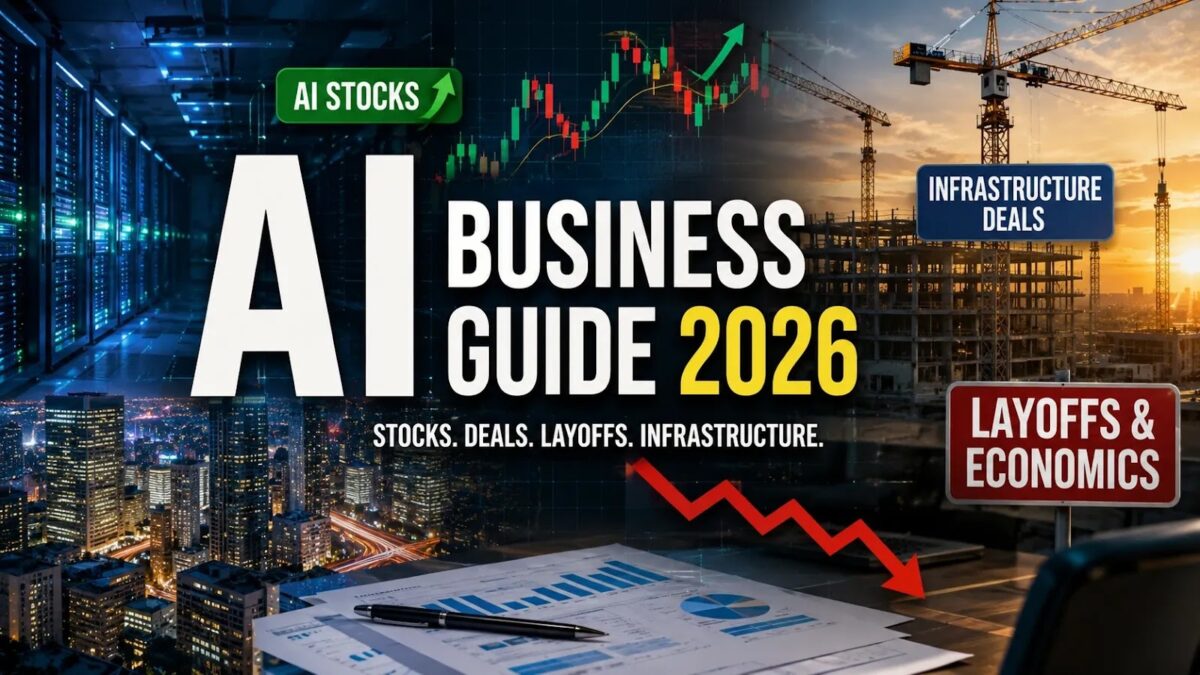
This AI business guide connects infrastructure, company earnings and workforce news. The first question for every story is what its number measures: a target, a signed obligation, revenue, an accounting gain or cash actually received.


Infrastructure: follow the commitment stage
Nvidia’s August financing-platform announcement targeted more than $500 billion of third-party capital over time and remained subject to final agreements. That is different from funded projects or Nvidia’s own expenditure. Our linked infrastructure articles distinguish targets, financing guarantees and delivered capacity.
Earnings: follow the cash as well as revenue
A company can grow a cloud business while spending heavily on equipment and facilities. Read segment results, capital expenditure, depreciation and free cash flow together. Alphabet’s dated earnings commentary and Amazon’s filings illustrate the categories; they do not establish one universal payback period for AI.
Unrealized gains on an investment are not equivalent to operating cash receipts. When a story compares companies, check their reporting periods, currencies and definitions before drawing a conclusion about who has “won” the AI market.
Workforce: separate explanation from proof
A technology-sector layoff count is not an AI-replacement count. Challenger’s report records announced cuts and stated reasons within its scope. An employer citing AI does not, by itself, prove that a model now performs every task previously done by the affected workers.
Four common mistakes in AI business headlines
- Adding overlapping financing targets into a single spending total.
- Presenting a company forecast as a completed result.
- Explaining a share-price move with one headline and no market methodology.
- Treating downloads or users as if they were paying customers.
A reusable reading template
For each story, record the source, date, metric, period, conditions and next milestone. Then write down what remains unknown. An announcement can be important without answering every commercial question at once.
Our analysis: the strongest business coverage makes uncertainty inspectable. A reader should be able to tell whether a claim comes from a filing, a company statement, reporting by another publication or the author’s interpretation. This hub now focuses on that framework rather than repeating unverified financial totals.
Explore the coverage
The topic map below retains the site’s existing links. Use each article’s source notes and update date to judge the evidence available for that story. A link in a hub is navigation, not certification of every historical claim on the destination page.
Sources and scope
Source check: November 17, 2026. Removed an unsupported opening earnings comparison and aggregate forecasts; retained the internal topic map and separated financial metrics. This is source-based reporting and editorial analysis, not a hands-on product or investment test.
Continue exploring this topic
Use these supporting articles to explore the topics in this guide. Reports describe the evidence available when each article was written; check its sources and date for context.
Stock Market Swings
- OpenAI Revenue Gap: The $20B Accounting Debate
- Micron Revenue: AI Memory Growth Behind the Headline
- AI Bubble: Scarcity, Surplus and Investment Risks
Infrastructure Deals
- Anthropic IPO: Price Range, Valuation and Big Tech Backing
- OpenAI Funding: The $11B Round and $1.25T Valuation
- Nvidia Hugging Face Deal: DOJ Questions and What's Known
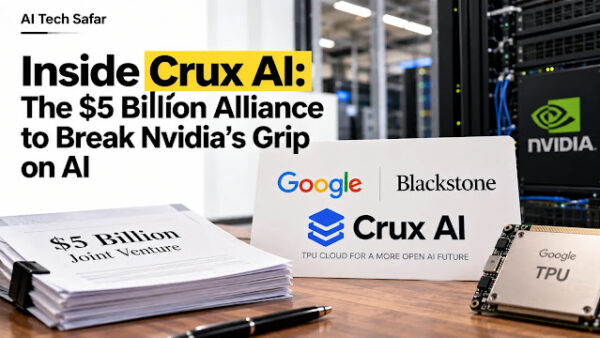
- Crux AI: Google's TPU Cloud and Blackstone's Bet
- Jev AI: TypeSafe's Decision Model and Funding Story
- Anthropic IPO Filing: October 2026 Reports and S-1 Status
- Nvidia SpaceX Stake: How the Investment Story Unfolded
- Nvidia AI Infrastructure: The $500B Spending Pitch
- AI Infrastructure Stocks: Suppliers Beyond Big Tech
For a company-funding example, read Mistral AI Valuation 2026: €21B+ Series D Explained, which compares announced funding rounds and explains how investment differs from company valuation.