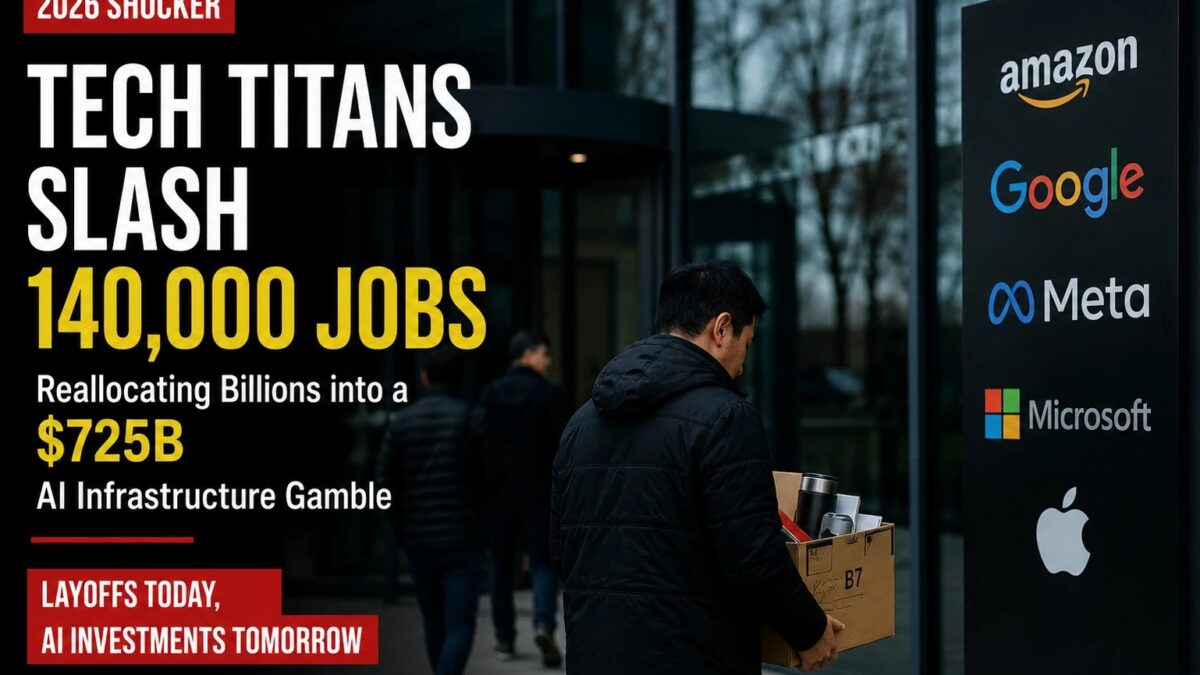
Technology layoff announcements and AI investment can rise together without proving that every lost role was replaced by AI. A useful account separates the number of announced cuts, the reason an employer gives and evidence about what happened to the work.

A dated measure of announced cuts
Challenger, Gray & Christmas reported 171,501 technology-sector job-cut announcements for January–October 2026. This is a dated announcement measure, not a count of workers independently verified as displaced by AI. The report’s total across all tracked industries was 617,189; the two categories should not be interchanged.
The earlier “140,000” framing reflected an earlier point in the year and should not be read as the current total. Different trackers can also cover different geographies, companies and kinds of announcement. A comparison needs a common period and definition.
Three questions behind an AI-related layoff
- What did the company announce? Record the roles, timing and whether the number concerns planned or completed departures.
- What reason did it give? Cost reductions, restructuring, weaker demand and automation can overlap.
- What evidence supports replacement? Look for changed processes and documented deployment, not just the word AI in an executive statement.
Why spending and cuts can coexist
A company may be building a new business while shrinking another. Capital expenditure buys assets over a period; payroll is a recurring expense. Comparing the two can reveal strategic priorities, but it does not establish that a specific layoff paid for a specific data center or that a new model eliminated a particular job.
It also matters whether a company is removing positions, not filling vacancies, shifting work to contractors or changing which skills it hires. Those decisions have different consequences even if they appear in the same restructuring announcement.
Do share prices prove the strategy worked?
No. A stock move can reflect earnings, guidance, interest rates and many other developments. This article no longer relies on an unsourced claim that AI-linked layoff companies underperformed the Nasdaq by nearly 10%. Establishing such a result would require a named sample, dates, a return methodology and treatment of other events.
Our analysis: company statements are evidence of what management says, not independent proof of automation’s net employment effect. For a worker or investor, a concrete workflow change is more informative than a broad AI-efficiency slogan.
Frequently asked questions
Does 171,501 mean AI replaced that many workers?
No. It is the technology-sector announcement total in the cited report, not an AI-replacement total.
Can different trackers report different totals?
Yes. Check their sector definitions, geographic coverage, cutoff dates and whether they count announcements or completed cuts.
Sources and scope
- Challenger October 2026 report: tables and scope
- Challenger June report: the earlier dated technology total
Source check: November 17, 2026. Updated the dated layoff measure and removed unsupported company-cut tables, stock-performance statistics and causal claims. This is source-based reporting and editorial analysis, not a hands-on product or investment test.